Heated Driveway Install That Makes Winter Shoveling a Thing of the Past
Nobody wants to wake up at 6am to shovel a long driveway in freezing temps. That's exactly the problem a heated driveway system solves - and it's one of those upgrades that pays for itself the first time a storm rolls through.
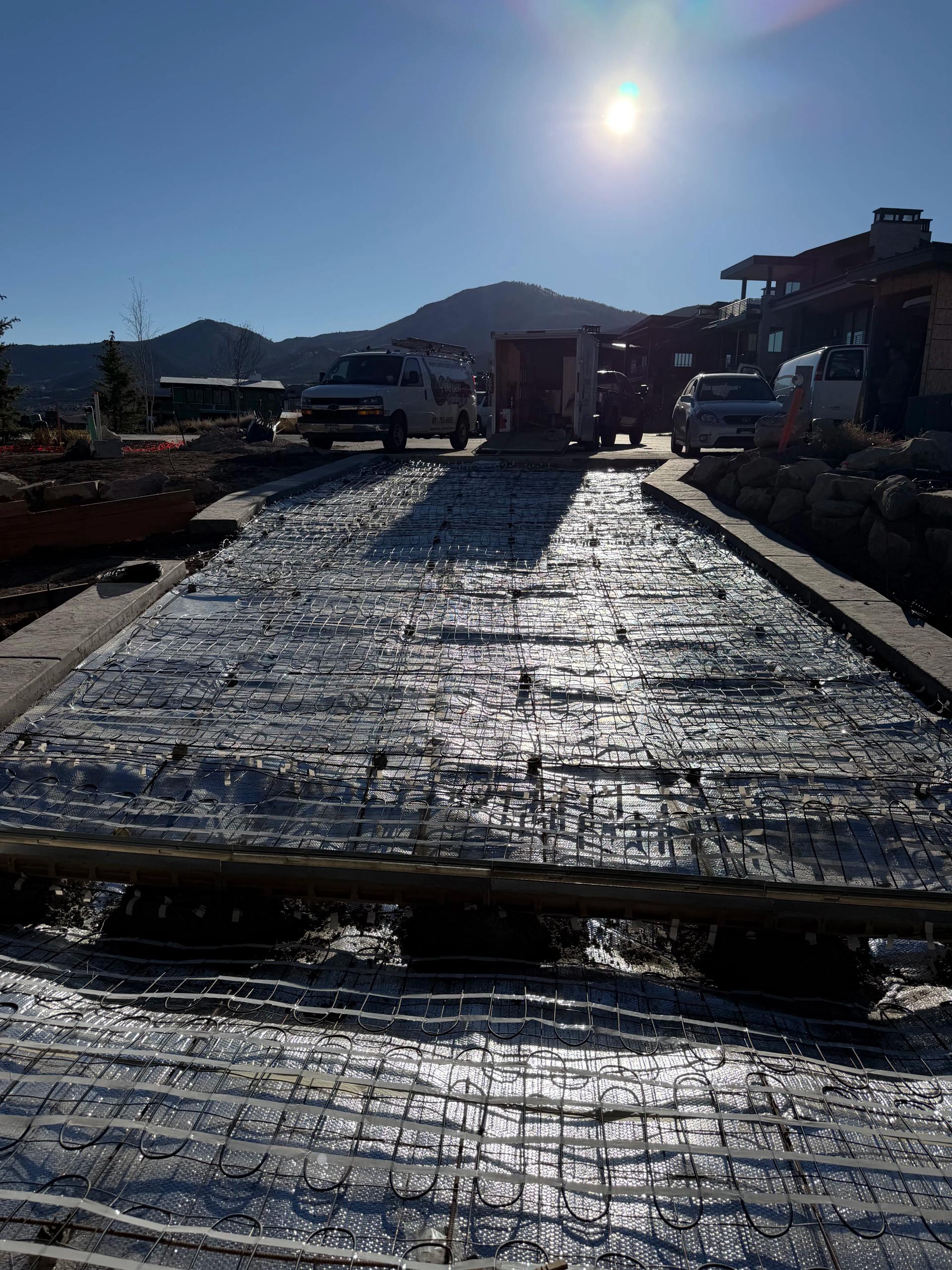
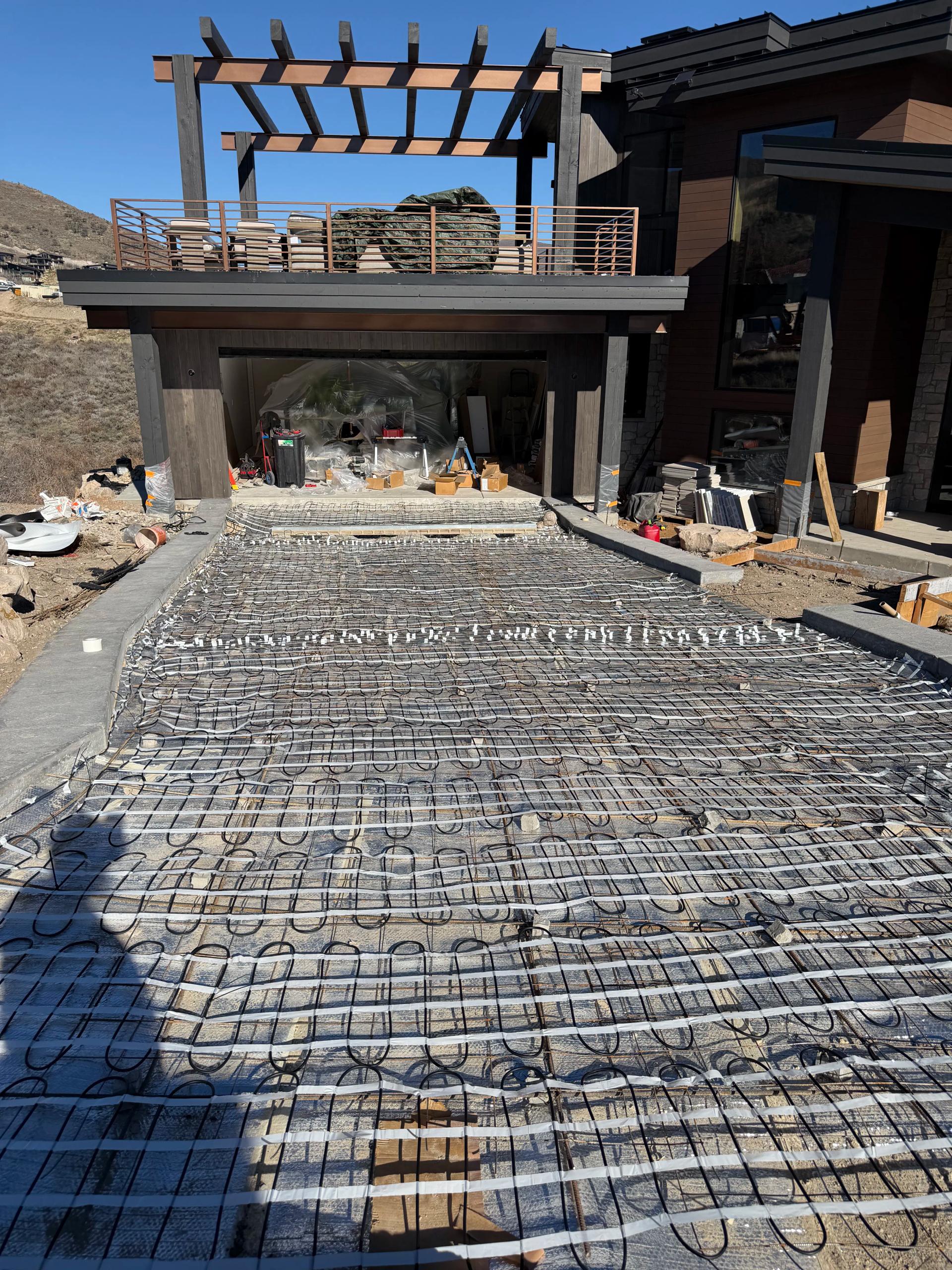
Here's what the install looks like before the concrete goes down. The heating cables are laid out in tight, uniform loops across the entire driveway surface - wall to wall, no gaps. That coverage pattern is the key to getting even heat distribution so you don't end up with hot spots in one area and ice patches in another. It has to be done right before the pour, because there's no going back after the concrete sets.
This type of system ties directly into your home's electrical panel and runs on a smart controller - most setups detect moisture and temperature automatically, so the system kicks on before ice even has a chance to form. No manual switching, no guessing. It just works.
For a custom home build in a mountain setting like this, a heated driveway isn't a luxury - it's a practical necessity. Steep grades and hard winters are a tough combination, and this kind of system handles both. We work on these installs as part of the broader build, coordinating with the concrete crew so everything gets staged and poured at the right time.
If you've been thinking about adding a heated driveway - either as part of a new build or as a standalone addition - this is the kind of work we do. The planning and layout phase is everything, and getting it dialed in before the slab goes down makes all the difference.